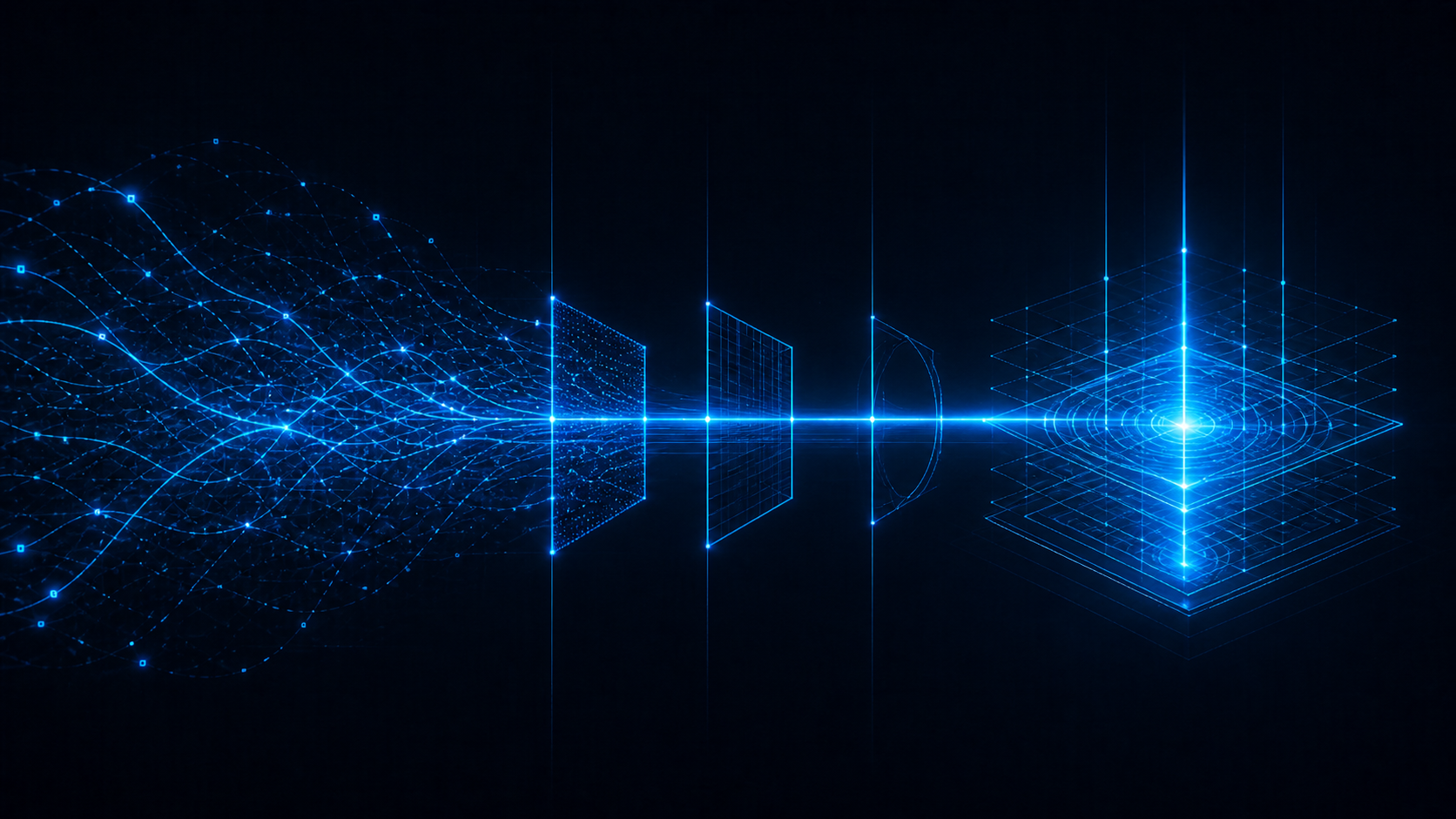
The information isn't the problem.
Most people have access to more frameworks, ideas, strategies, and content than they could ever apply. The problem isn't a lack of input. The problem is too much of it, with no way to distinguish what actually matters from what's just occupying space.
That's the noise problem.
How noise accumulates
Noise isn't always loud. A lot of it is quiet. It's the background hum of obligations that aren't examined, inputs that aren't filtered, and stimulation that has become so constant it no longer registers as stimulation.
The result is a kind of cognitive crowding. There's no space to think clearly because the space is always full. Every moment of potential clarity gets filled before it has a chance to develop into anything.
The mind that can't find quiet can't find direction. The direction is there. There's no stillness in which it could surface.
Signal vs. noise
Signal is what actually matters to you. What you value. What you're building toward. What gives your days weight and direction. Signal is usually simpler than people expect, and harder to access.
Noise is everything that crowds it out. Not because it's bad. Much of it is reasonable, even necessary. But when it's not consciously filtered, it runs the show by default.
The person who has learned to distinguish signal from noise consistently makes better decisions. They're working with less information, not more. The right amount.
What reduction requires
Getting clearer doesn't come from adding more. It comes from removing. Fewer inputs, examined more carefully. Fewer commitments, held more seriously. Less content consumed, more time spent with what's already known.
This runs against most of what the modern environment rewards. The environment rewards engagement, consumption, and output. It doesn't reward stillness, subtraction, or silence.
But stillness is where the clarity lives. That's what MetaOS is built to help recover.
The FAST Newsletter
Weekly conversation, the FAST Framework, and feedback that helps the work take. Free.